

XG Forever
+ image making as identity, Qween Jean makes historic Tony win, Onitsuka Tiger levels up and more
Hey, hi, hello! Welcome back to Fashion Tingz.
I’m not sure what happened to British summer, but that brief period of sunshine and clear skies we had a few weeks ago feels like a fever dream as the UK resorts to what it does best: grey skies, clouds, and a whole lot of rain.
This is bound to dampen the mood a little bit, am I right? But I digress. This week has been an exciting one at Fashion Tingz HQ, with a digital zine on the way next week (keep your eyes peeled) and other projects on the horizon.
With that being said, I’d love to know what you want to see more of (and why if you’re up for sharing). Do you like the fashion cultural analysis, the subcultures, the personal essays? Or do you want something else entirely?
— J’Nae xoxo
IN THIS EDITION: XG’s visual language and offbeat fashion identity. Nigel Cabourn has died after more than five decades in the industry. Chanel is betting big on its jewellery creation studio. Qween Jean becomes the first openly trans person to win a Tony Award. BFC unveils its latest Fashion Trust winners.
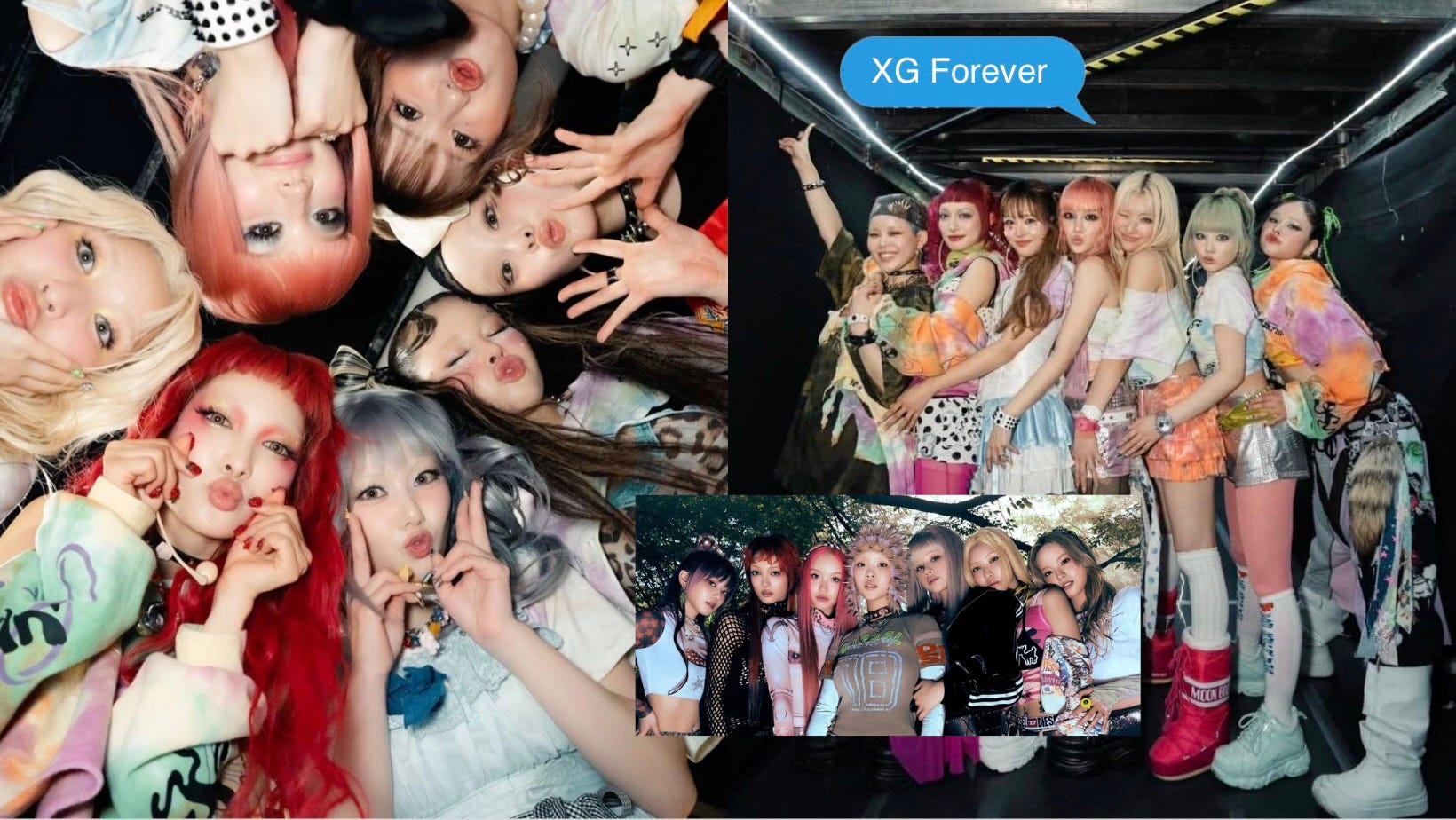
If you’ve fallen down the algorithmic rabbit hole lately, chances are you’ve encountered XG as a kind of hyper-synchronised organism beamed in from some chrome-plated near future. They’re all Japanese. They trained under the K-pop system. They’re based in South Korea. They perform primarily in English. If pop culture had a passport, XG’s would be thick with stamps and impossible to categorise. Nothing about them fits neatly into a single national box, genre label, or aesthetic lane, and I’m into this friction.
My entry point into the XG universe began with the 2024 music video for HOWLING. Plenty of groups have strong concepts, but HOWLING possessed something rarer: visual conviction. As a fashion person, the first thing that struck me wasn’t the choreography or the production; it was the styling. Every frame? Editorially on point. Every silhouette? Carefully engineered to communicate power rather than prettiness. The video was an invitation into an alternate fashion ecosystem where streetwear, sci-fi, Y3K and club culture merged into one.
Watching the video, trying my best to pretend I was the eighth member of the group, I began to understand XG’s appeal. They’re worldbuilding artists more than anything, drawing viewers into the space they’ve built. The seven members — Jurin, Chisa, Hinata, Harvey, Juria, Maya and Cocona — function almost like characters in an ongoing fashion narrative. Each possesses a distinct visual identity, but together they operate with a precision that’s hard to master and harder to fake.
For decades, girl groups have been designed as local fantasies packaged for export: the immaculate synchronicity of K-pop, the hyper-theatrical sweetness of J-pop, the glossy R&B lineage of American pop. XG collapses that geography. They aren’t “crossing over” because they never positioned themselves on one side to begin with. Their English-language releases don’t feel like strategic concessions to Western markets; they feel like the default setting. Western fans aren’t discovering a foreign scene through XG; they’re simply discovering XG.
Sonically, they lean hard into hip-hop and R&B with a conviction that separates them from the brighter, bubble-forward tendencies associated with other girl groups. As a 90s baby and the soundtrack of my youth hinging on such sounds, it’s no wonder I’m a fan — they also recently performed every millennial Londoner’s favourite UK garage anthem at Capital’s Summertime Ball 2026, can you believe?! It’s this melting pot style of musical direction that fundamentally shapes their visual identity, so colour me intrigued. Hip-hop and R&B have always been aesthetic powerhouses where fashion says a lot without having to say anything at all. Yet XG are filtering these codes through a distinctly Eastern appetite for experimentation: playful distortion, intentional clashing textures and silhouettes that reject conventional proportions altogether. Where many groups chase polished prettiness, XG embraces controlled chaos. Beauty, in their world, is about impact.
Much of that impact can be traced to stylist Jang Heejun, XG’s primary wardrobe architect, whose work shapes the visual identity of many of their music videos, performances and public appearances. For larger projects, Heejun collaborates with the acclaimed Korean styling duo IBAEKILHO, whose influence can be felt in some of the group’s most memorable fashion moments. Together they’ve created a visual language that feels simultaneously luxurious, streetwise, futuristic and deeply referential. The result is a group whose styling never feels secondary to the music; it’s part of the storytelling machinery itself.
Look no further than SHOOTING STAR and its glittering collision of Y2K fantasy and rap bravado. Or GRL GVNG, where militaristic silhouettes and tactical styling transform the members into a futuristic unit. And then we’ve got WOKE UP, perhaps their most fashion-forward release to date, where grills, shaved heads, custom streetwear and avant-garde beauty choices push against every lingering expectation of what a girl group should look like. Their attire often feels like fashion editorials rendered through speculative fiction. Reflective surfaces, futuristic tailoring, experimental beauty looks and silhouettes that elongate, exaggerate and abstract the body dominate. There is always a sense of intention and reinvention, and we love to see it.
What makes XG’s fashion compelling, for me at least, is how it carries the expansive DNA of Japanese styling culture into a global arena. Harajuku street style, visual kei, gyaru, avant-garde designers, cosplay culture, luxury fashion and underground club aesthetics have historically existed in productive conversation with one another. The result? A delightful mishmash of fashion that treats identity as a creative medium rather than a fixed category. XG channels this energy tenfold. And as Western fashion continues to wrestle with copy-and-paste trend clout chasing, audiences are hungry for the spectacle that XG provide. Their impact hits a nerve because they’re not toning down Japanese expressiveness to court the West. If anything, the West is recalibrating its tastes around them.
Harvey, in particular, embodies the crossover between idol culture and luxury fashion. She’s become somewhat of a Miu Miu girl, attending the reopening of the brand’s Ginza store, which felt entirely natural. Harvey already possesses the slightly offbeat glamour that Miuccia Prada’s universe celebrates so well. She occupies that sweet spot between elegance and eccentricity, capable of making experimental styling appear effortless.
Yet no discussion of XG’s cultural significance feels complete without addressing the maknae. Where girl groups have historically been built around rigid marketable femininity, Cocona’s January 2026 announcement as transmasculine non-binary represented a huge shift. The group officially changed the meaning of its name from “Xtraordinary Girls” to “Xtraordinary Genes”, because that’s what you call solidarity. The following month, we were blessed with Cocona’s appearance at Demna’s debut Gucci FW26 show as one of its newest brand ambassadors, with top surgery scars visible and incorporated into the styling rather than hidden. Major. Or cunty, as I saw one Instagram user put it. It felt significant because for decades, pop stardom has relied upon carefully maintained illusions of perfection. But rather than weakening the fantasy, Cocona expanded it.
Perhaps the most remarkable thing about XG is their understanding that fashion is performance. Not decoration, not branding, but performance. Whether appearing on Korean music shows, international festival stages, YouTube interview series, magazine covers, red carpets or global tours, they approach clothing as an extension of narrative. Every era of theirs arrives with its own visual grammar, and every outfit contributes to a larger story.
One performance might evoke cyberpunk streetwear. The next could recall archival luxury references. Another combines athletic wear, experimental tailoring and futuristic beauty styling into something entirely new. XG and their team understand something many artists forget: audiences may first hear the music, but what they remember is the image.
*Tysm for indulging me and letting me wax lyrical about this. If you’ve read to the end, you’re a real one.
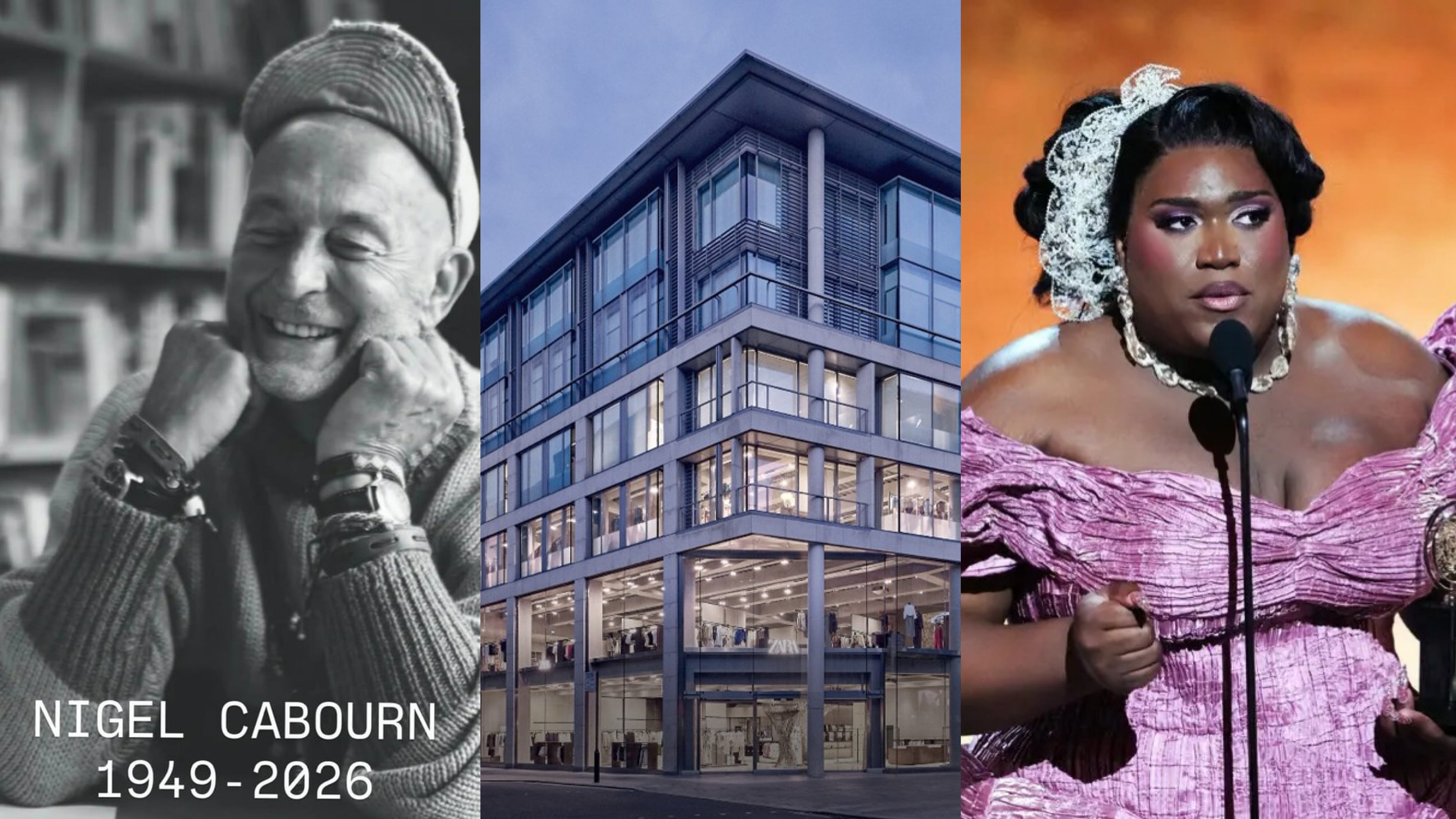
Nigel Cabourn has died, bringing to a close a fashion career that lasted more than half a century. Born in 1949, he studied at Newcastle Polytechnic and launched Cricket Clothing while still a student. A campus venture evolved into an eponymous label whose appeal crossed borders with ease, finding devoted followers in British boutiques, Paris showrooms and, perhaps most passionately, Japan. Few designers mined the past so relentlessly while remaining so relevant in the present.
Chanel has tapped Marie-Laure Cérède to lead its jewellery creation studio, handing the keys to one of luxury's most storied treasure chests to a designer who has already shaped the fortunes of Cartier and Harry Winston. A veteran of both jewellery and watchmaking, Cérède will oversee all of Chanel's precious and high jewellery collections from October 2026. The appointment suggests Chanel is betting that, in an age of fleeting trends, deep expertise remains the rarest gem of all.
Qween Jean has become the first openly transgender person to win a Tony Award, earning best costume design of a musical for Cats: The Jellicle Ball. For the queer ballroom-inspired revival, the designer and activist created 500 looks that ranged from oversized leopard-purse accessories to garments embroidered with tributes to trans trailblazers, including Sylvia Rivera, Marsha P. Johnson and Miss Major Griffin-Gracy. The result was a reminder that great costume design can do more than transform characters; it preserves and celebrates the communities behind them.
Zara's revamped Bond Street flagship suggests the fast-fashion giant is no longer content to compete solely on speed and price. The newly renovated, tech-enabled store, occupying a prime corner of Oxford Street and New Bond Street, is the latest expression of the brand's gradual ascent upmarket. As rivals race to the bottom, Zara is betting that better spaces, smoother experiences and a touch of luxury will prove more profitable. Early signs are encouraging: Inditex says its larger, upgraded stores are delivering stronger sales per square foot, turning retail square metres into a surprisingly effective luxury asset.
The British Fashion Council has unveiled its latest Fashion Trust winners. The selected designers — Clio Peppiatt, Conner Ives, Nicholas Daley, Paolo Carzana, Patrick McDowell and Tolu Coker — will receive funding and tailored guidance aimed at building what the Council calls “resilient, future-facing” businesses. Translation: creativity is in, but so is endurance training. These awards are as much about staying power as they are about style.
Onitsuka Tiger is stepping out on its own, at least in spirit. From January 1, 2027, the brand will operate under a newly formed subsidiary, OT GROUP, in a move that gives it greater autonomy over its creative and strategic direction, while ASICS remains the sole shareholder. In corporate terms, it’s less a breakup than a carefully choreographed separation: ASICS doubles down on performance and technical precision, while Onitsuka Tiger is free to lean further into its fashion-forward ambitions. One parent keeps the stopwatch; the other keeps the spotlight.